
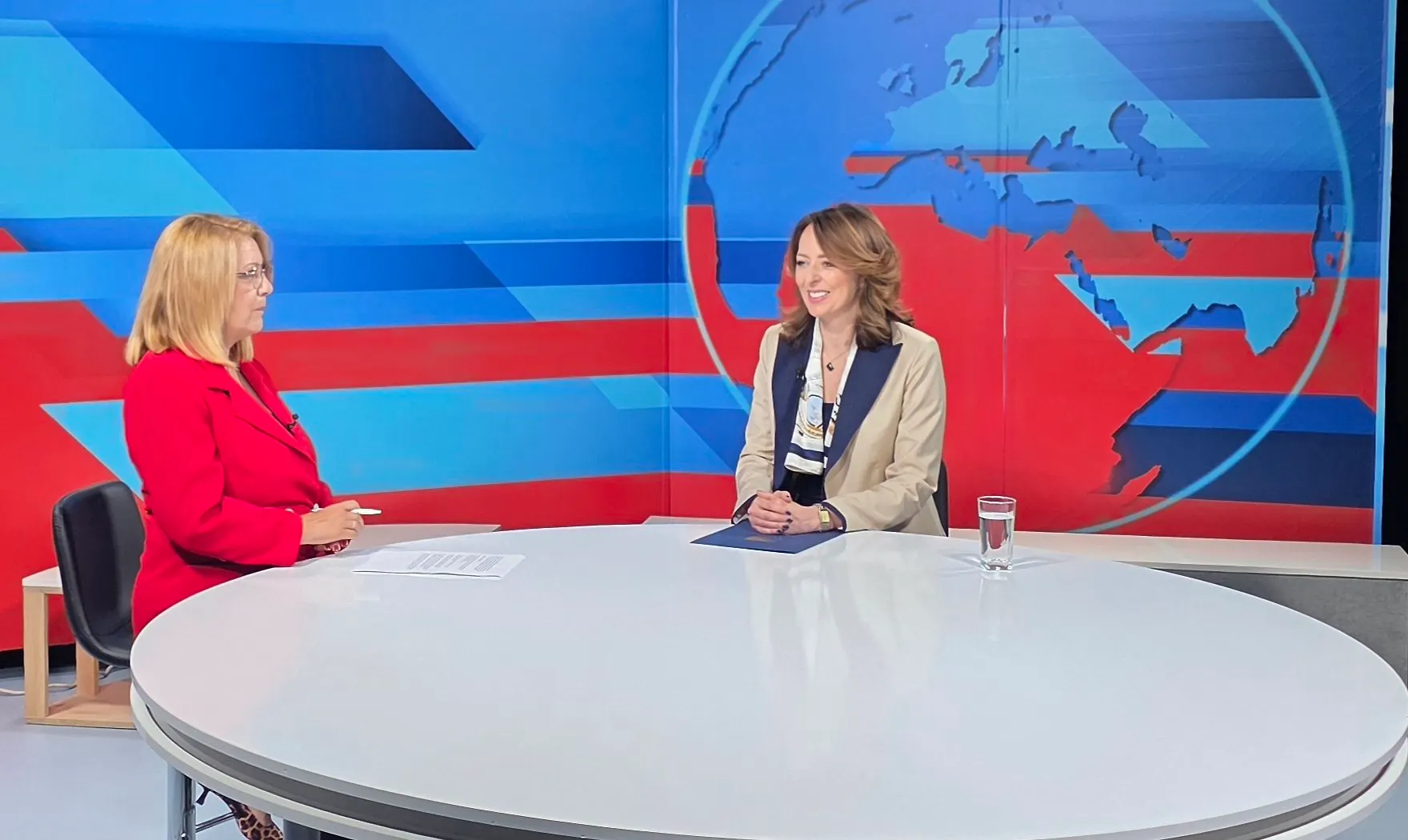
The Minister of Civil Affairs of Bosnia and Herzegovina, Dubravka Bošnjak, appeared on RTV Herceg-Bosna's news program, where she spoke with editor and presenter Olivera Dimač about Bosnia and Herzegovina's accession to Eurotransplant, the strictly regulated medical use of cannabis, and the new demining law.
Significant progress has been made at the state level in all three areas. However, full implementation now depends on action by the competent entity-level authorities.
The Road to Eurotransplant
The longstanding problem of the low number of organ transplants in Bosnia and Herzegovina is expected to be addressed through accession to the Eurotransplant network. At the beginning of 2024, Bosnia and Herzegovina submitted its official letter of intent for full membership, followed by two visits from Eurotransplant delegations. The first took place in Sarajevo in November last year, while during the second visit representatives toured university clinical centres in Mostar and Tuzla.
"It was truly a very positive moment, especially for the University Clinical Hospital Mostar, as they had performed their first transplant just a few days earlier. There was therefore a great deal to see and demonstrate," Minister Bošnjak said.
During the first visit, Bosnia and Herzegovina received a draft Teaching and Training Agreement (TTA). Following a meeting in Leiden, the Netherlands, on 6 June, the Bosnian side sought ways to begin cooperation even before fulfilling the strict requirements for full membership. The agreement will enable healthcare institutions in Bosnia and Herzegovina to exchange knowledge and expertise with member countries, as well as participate in a limited exchange of organs. However, its signing remains on hold because the draft was forwarded to the entity-level institutions eight months ago, and their responses are still pending.
Medical Use of Cannabis
Regarding the use of cannabis for medical purposes, on 29 December last year the Council of Ministers of Bosnia and Herzegovina removed the principal legal obstacle by transferring cannabis from the list of prohibited substances to the list of substances subject to strict control. Although this formal procedure has been completed, practical implementation has once again stalled due to the lack of action by the entity ministries.
Following a recently held roundtable with key stakeholders, it was concluded that the next step is the adoption of entity-level regulations.
"The regulations will determine which physicians may prescribe cannabis-based medicines, which patients are eligible to receive such therapy, the medical indications under which it may be prescribed, and which pharmacies will be authorised to dispense these medicines," Bošnjak explained.
She added that both the Eurotransplant accession process and the regulation of medical cannabis have been delayed for more than a decade, expressing hope that the Federation Ministry of Health will present its first draft regulation by 1 August, as originally agreed.
New Demining Law
Almost 30 years after the war, approximately 1.5 percent of Bosnia and Herzegovina's territory—around 750 square kilometres—remains suspected of mine contamination. The Ministry of Civil Affairs has prepared a new Law on Humanitarian Demining to ensure stable funding for demining operations and to resolve the issue of preferential pension and service benefits for deminers.
"We want to resolve the issue of financing in a way that ensures the state takes clear responsibility for this process, so that it is no longer funded primarily by donors, as has been the case until now," Bošnjak said.
The draft law has received positive opinions from the Government of the Federation of Bosnia and Herzegovina and the Brčko District Government, while the opinion of the Government of Republika Srpska is still awaited.
A significant boost to demining efforts is also expected from Croatia, which was officially declared mine-free in March this year. The Ministry is engaged in intensive negotiations with Croatia on the transfer of part of its technical equipment and demining capacities, as well as financial assistance, which could significantly accelerate the otherwise slow pace of mine clearance in Bosnia and Herzegovina.