
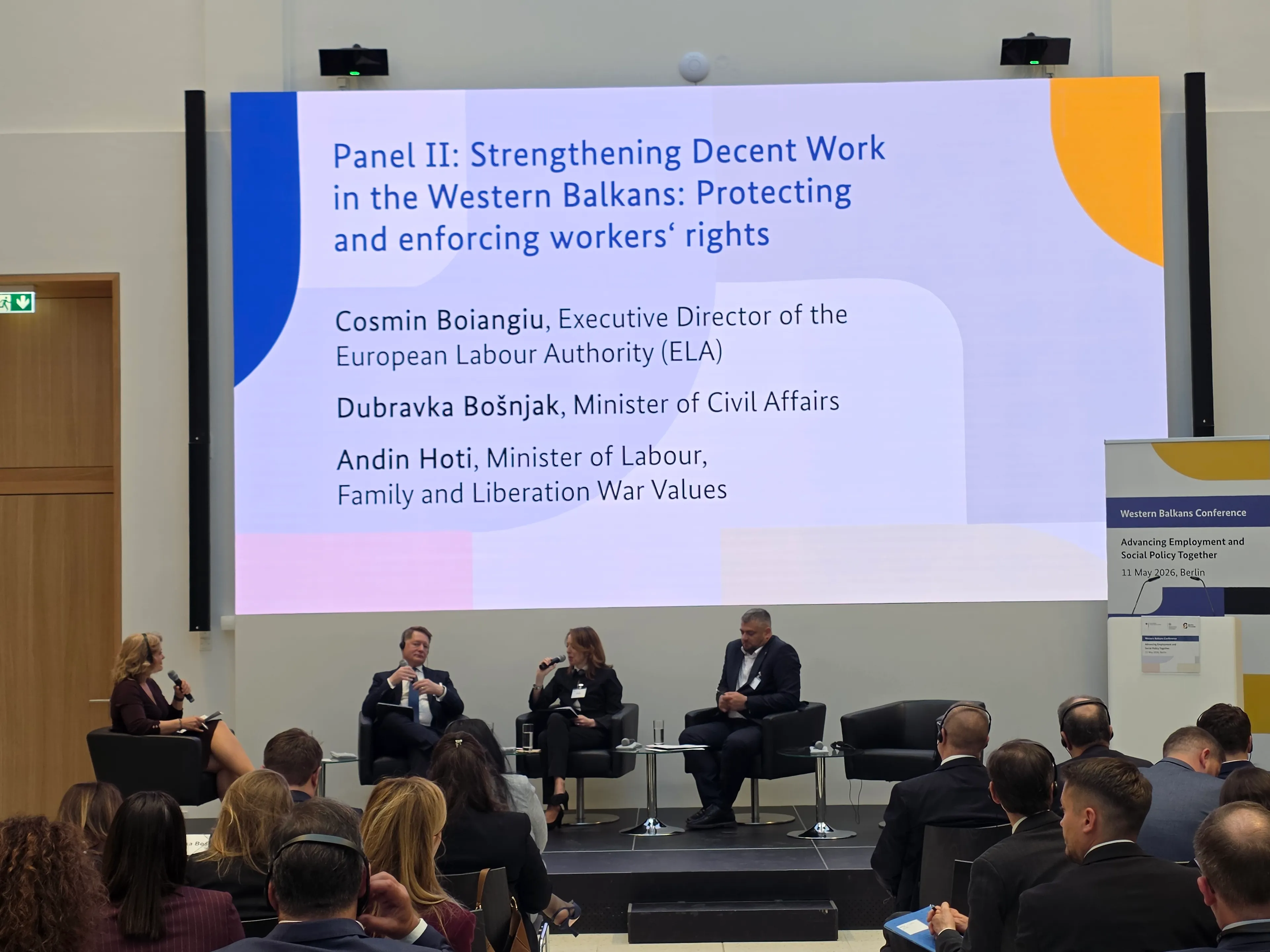
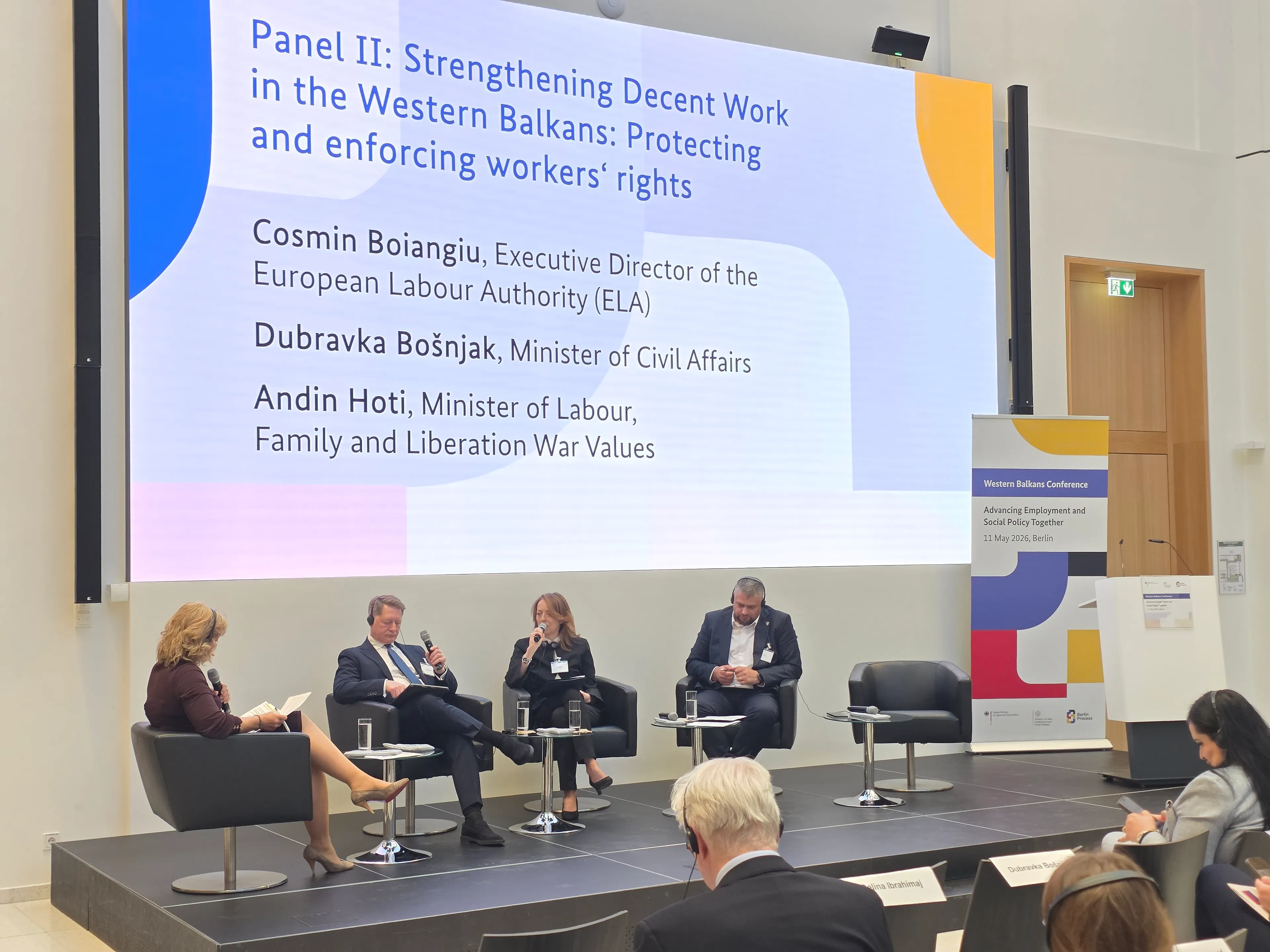
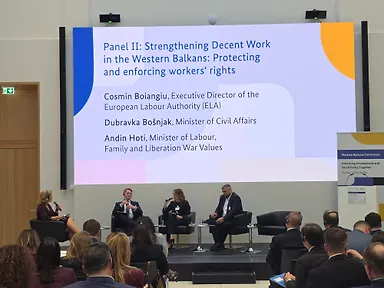
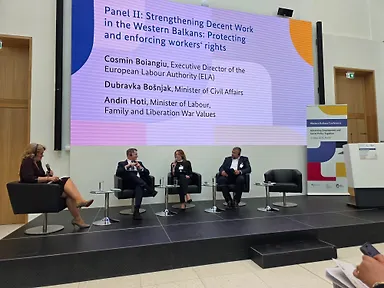
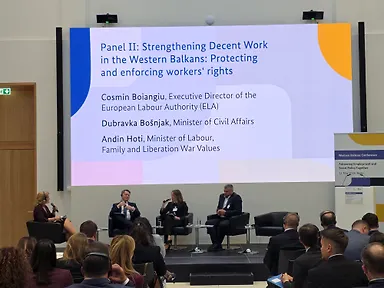
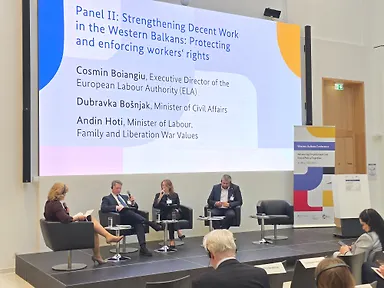
At the invitation of the Federal Minister of Labour and Social Affairs of the Federal Republic of Germany, Bärbel Bas, the Minister of Civil Affairs of Bosnia and Herzegovina, Dubravka Bošnjak, participated in the international conference “Western Balkans Conference: Advancing Employment and Social Policy Together” held in Berlin.
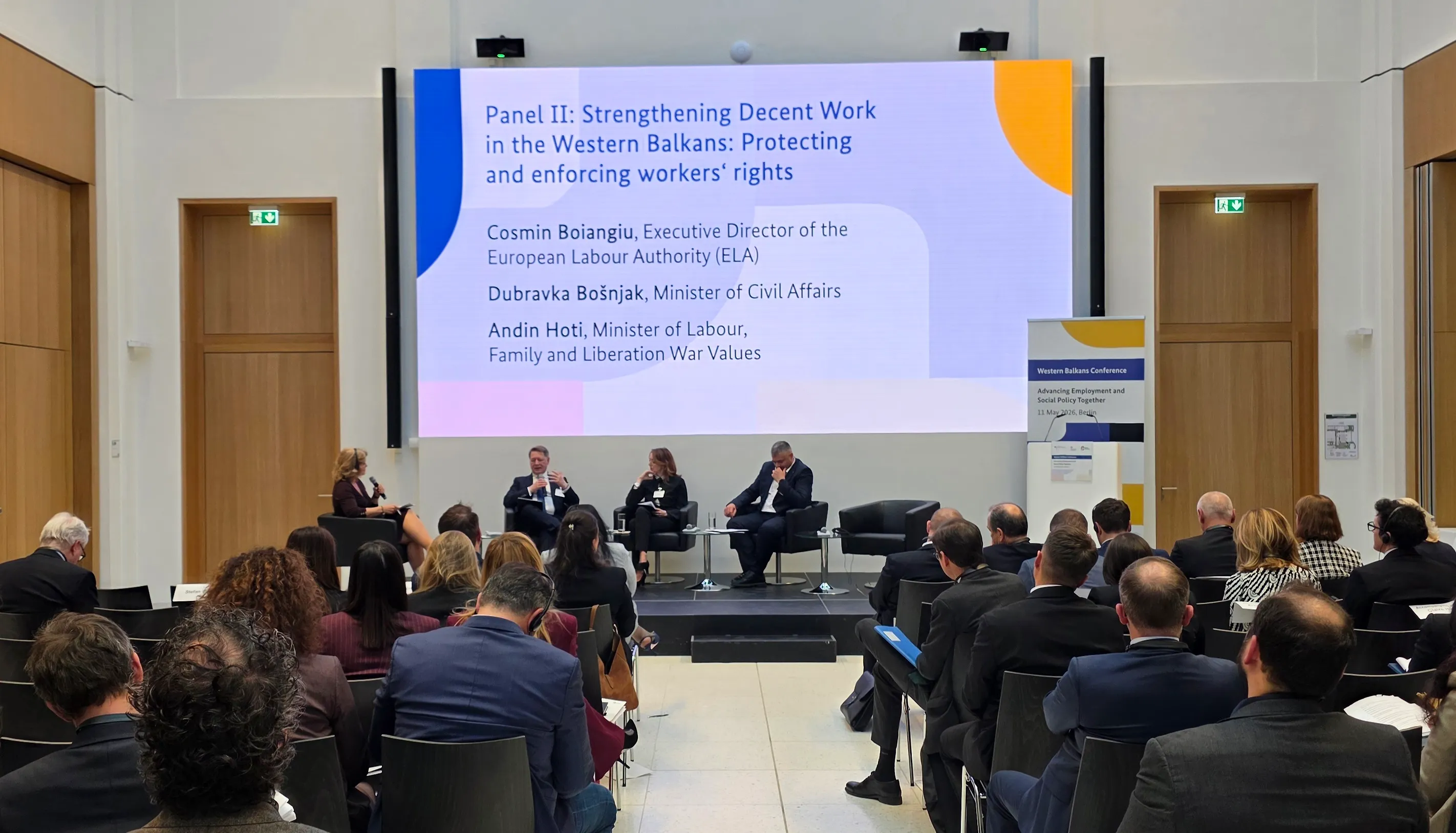
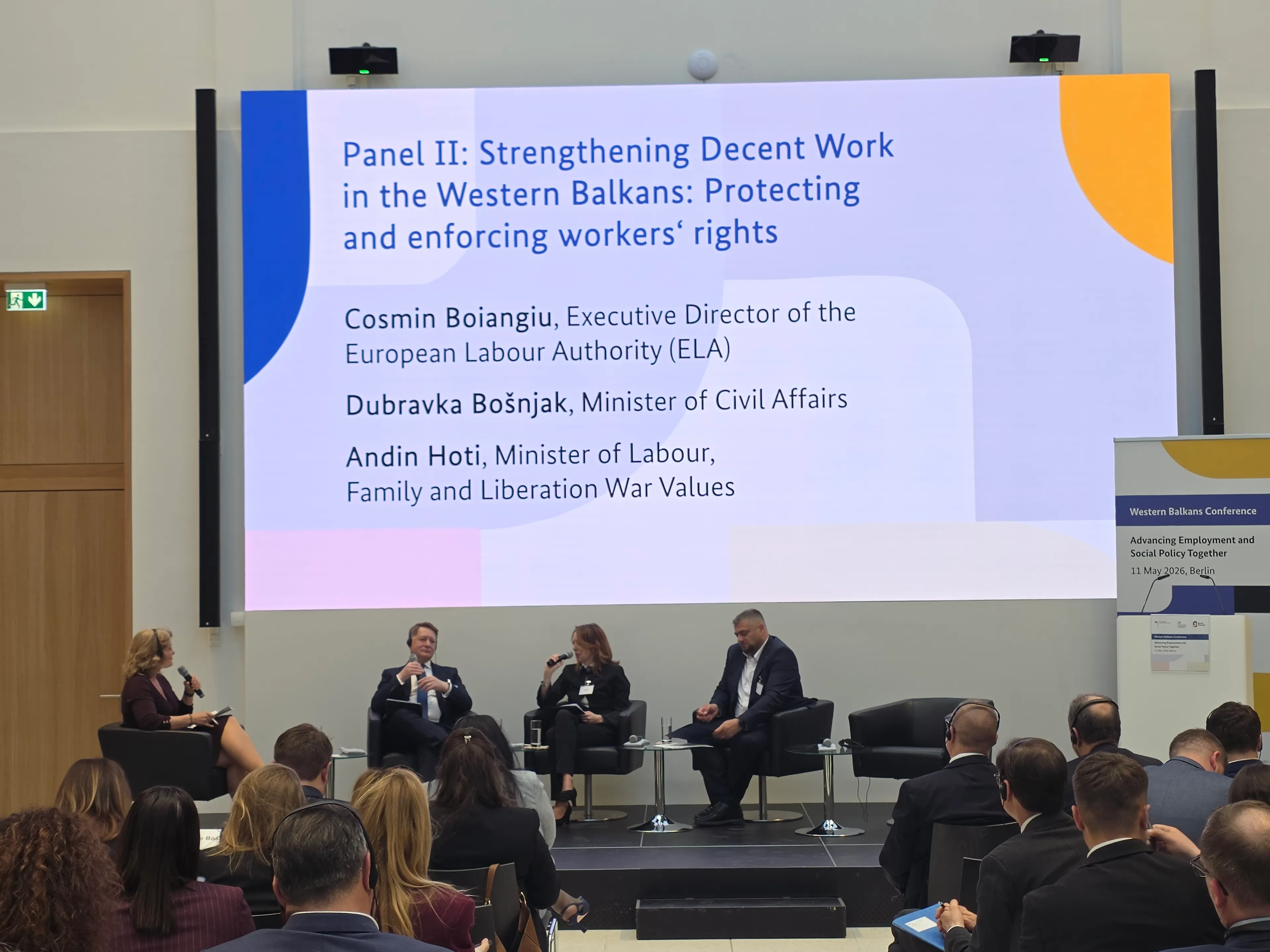
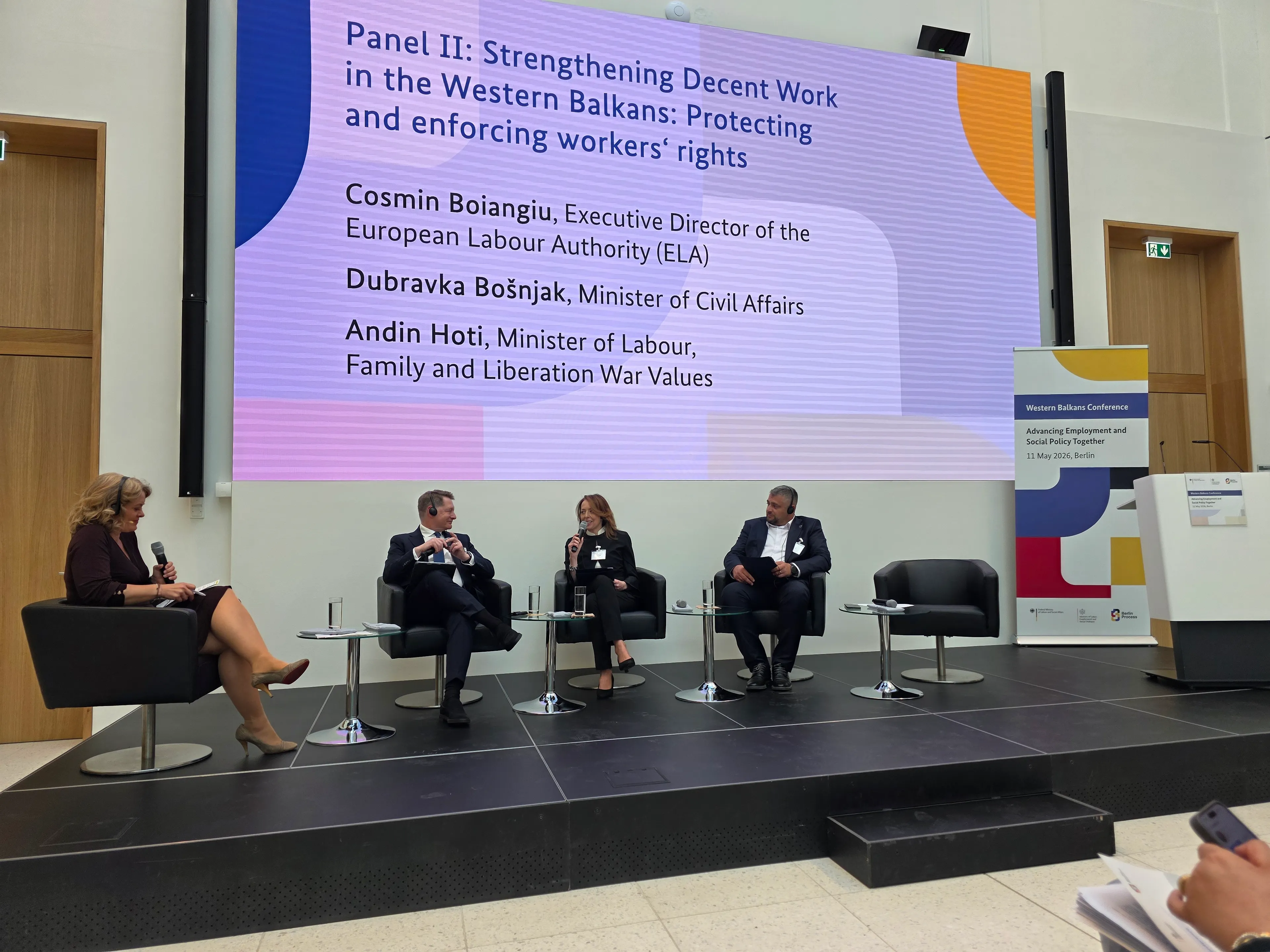
The conference gathered representatives of Western Balkan governments and relevant international partners with the aim of strengthening regional cooperation, improving labour rights, and modernising labour markets and social protection systems. Minister Bošnjak took part in a panel discussion where she and her colleagues addressed key challenges related to improving the legislative and institutional framework.
She emphasized that, although Bosnia and Herzegovina has a legislative framework aligned with international standards, the key challenge remains the gap between legal norms and their actual implementation in practice. The Minister pointed out that workers often do not enjoy the desired level of protection due to the grey economy, undeclared work, and the limited capacities of labour inspections, all of which directly weaken the position of the workforce and encourage emigration. She therefore stressed the need for digitalisation of oversight mechanisms, continuous education, and strengthening the culture of workplace safety in line with European Union best practices.
She also recalled the constitutional structure of Bosnia and Herzegovina, where competences are divided among the entities, Brčko District, and cantons, explaining that the Ministry of Civil Affairs at the state level primarily plays a coordinating role in connecting competent institutions and encouraging a joint approach to reforms aimed at harmonisation with European standards.
Minister Bošnjak underlined Bosnia and Herzegovina’s firm commitment to labour market reforms, noting that regional cooperation and support from European funds can significantly accelerate the modernisation of institutions.
Special emphasis was placed on the position of young people, with the Minister stating that Bosnia and Herzegovina will intensify activities within the framework of the European Union’s “Youth Guarantee” initiative in order to ensure that every young person is provided, within a short period of time, with an opportunity for employment, education, or vocational training.
The conference in Berlin was opened by the German Federal Minister of Labour and Social Affairs, Bärbel Bas, who stressed the importance of cooperation in a time marked by numerous crises and conflicts.
“It places employment and social policy at the centre, and therefore the well-being of people. We want to preserve employment, create good working conditions, and strengthen participation. This is about opportunities and prospects for people in the Western Balkans, and above all, about social peace and stability. That is our common goal,” Bas said.
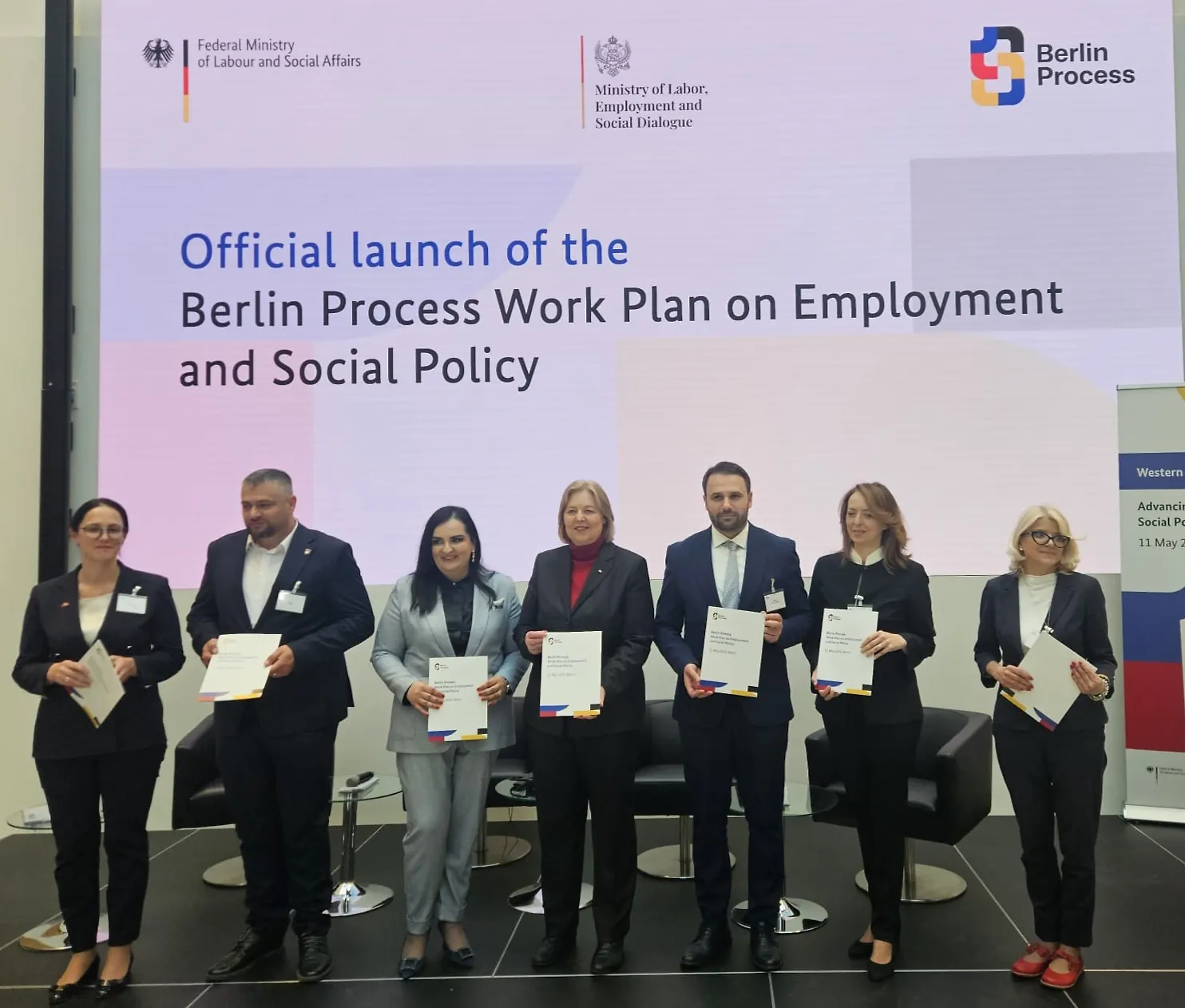
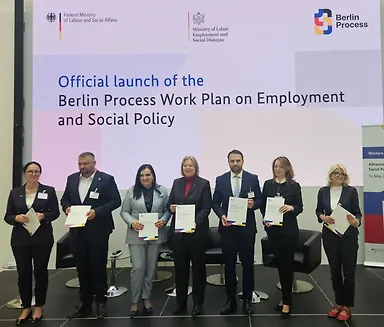
The conference resulted in the adoption of the Action Plan for Employment and Social Policy, a document prepared by the countries of the region with the support of the German Federal Ministry of Labour and Social Affairs, representing a major step forward toward coordinated reforms.
The conference in Berlin brought together six ministers responsible for labour and employment from the Western Balkans, senior representatives of the European Commission, international organisations, social partners, and experts.