News
Organ Donation Conference: Concrete Results Are Needed
10/14/2026
Ministarstvo civilnih poslova Bosne i Hercegovine
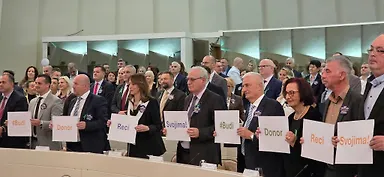
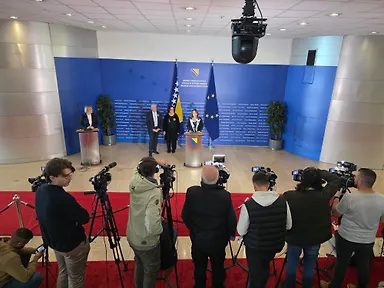
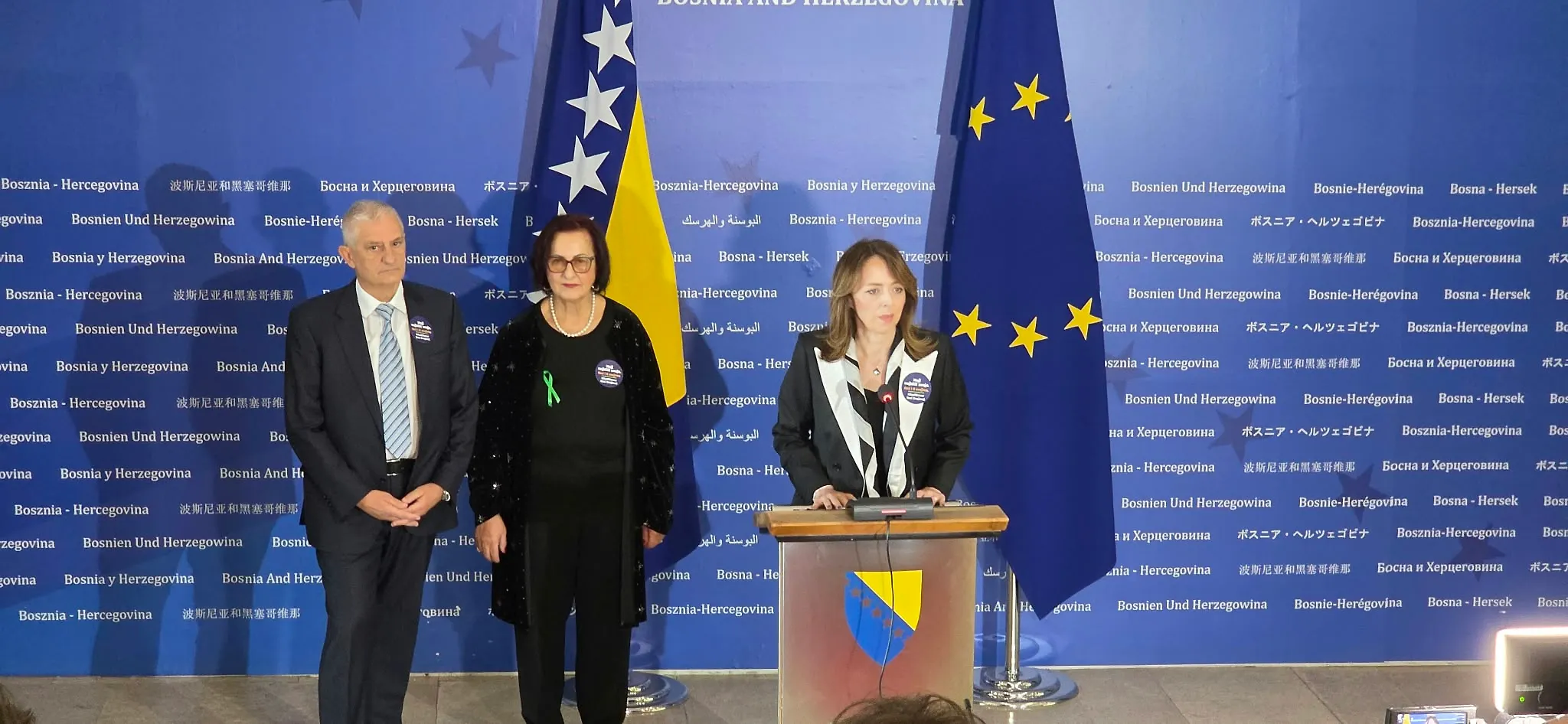
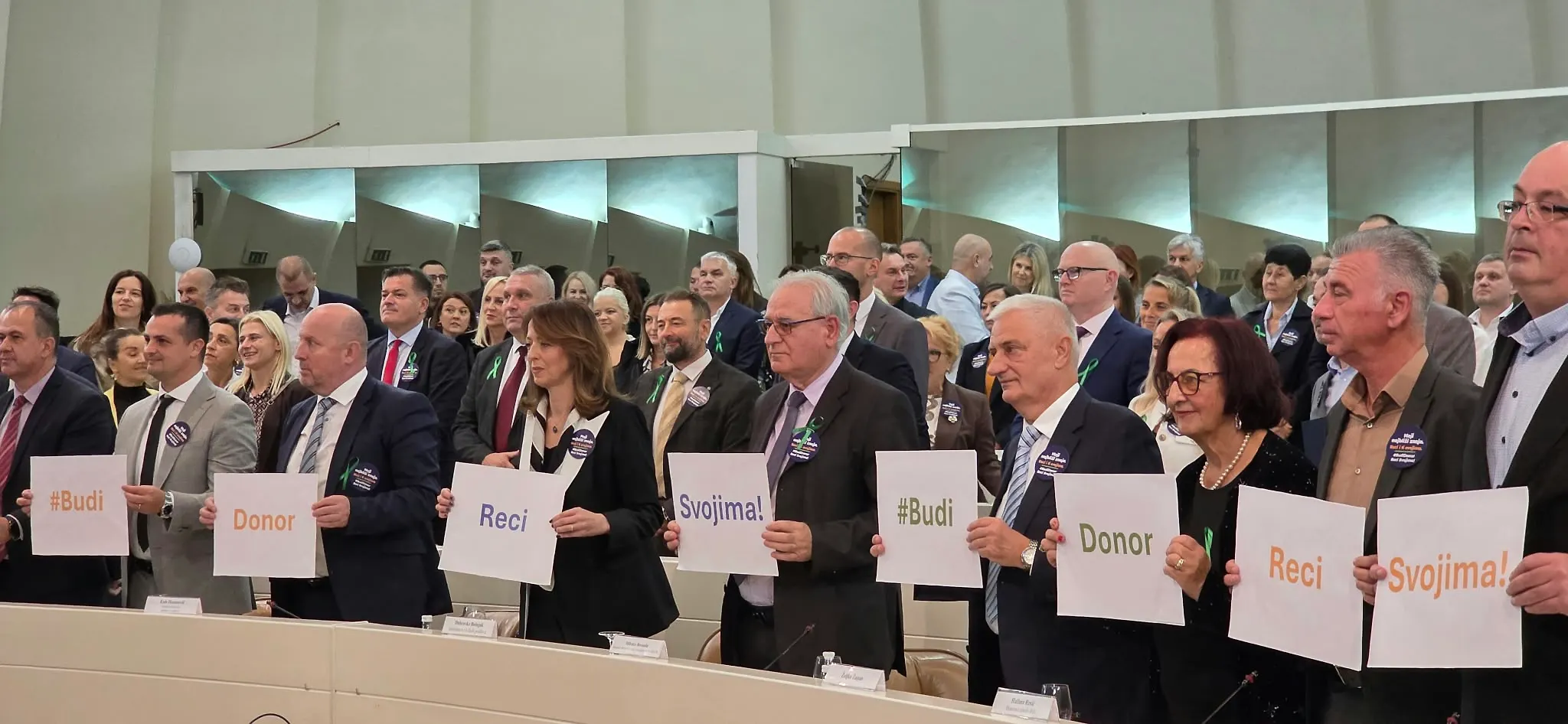
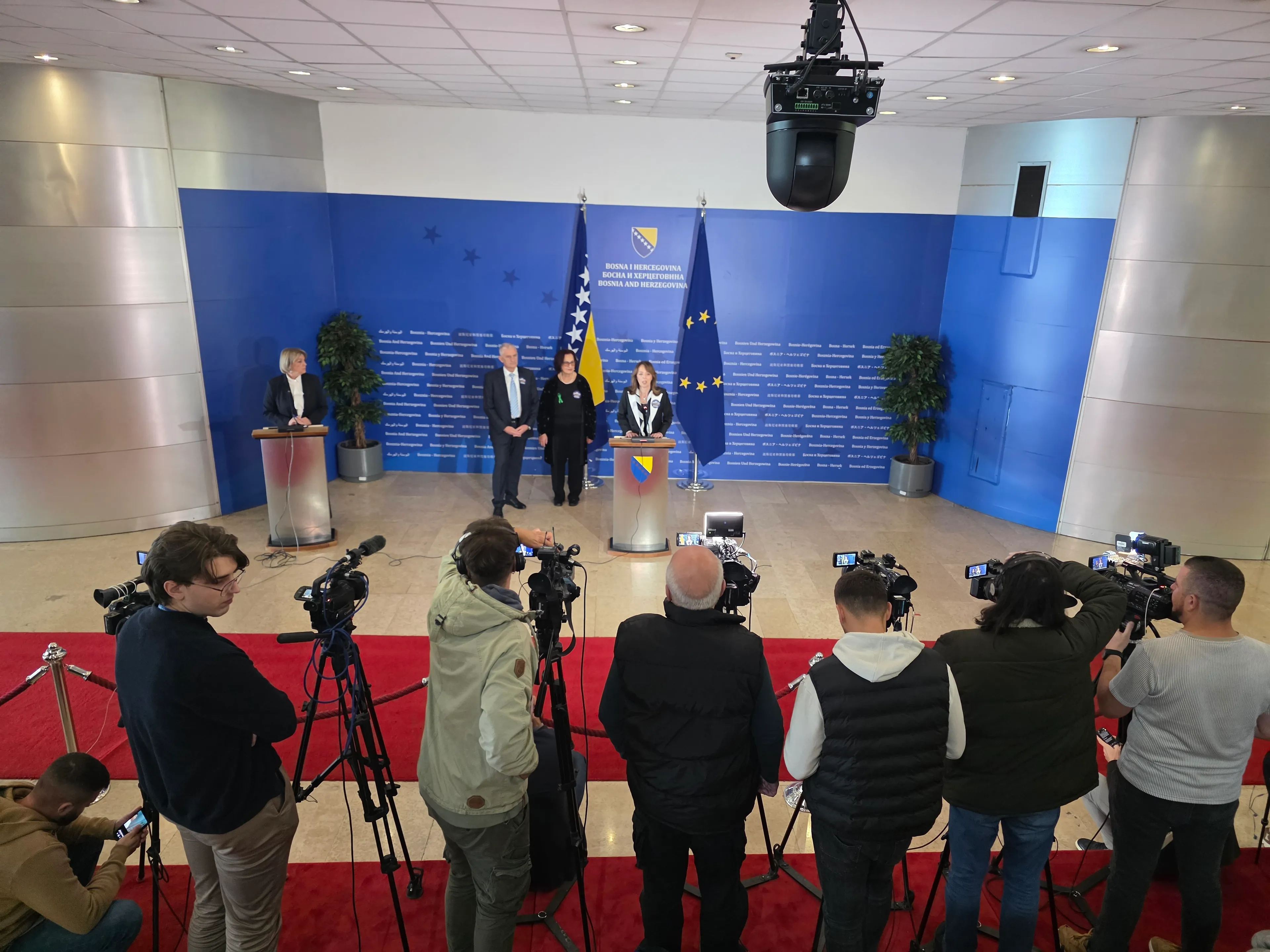
Improving hospital donor programmes, strengthening transplantation capacities and continuing cooperation with Eurotransplant were the central themes of the Third State-Level Conference on Organ Donation and Transplantation Medicine, held today at the Parliamentary Assembly of Bosnia and Herzegovina on the occasion of European Organ Donation Day.
The conference was organised by the Ministry of Civil Affairs of Bosnia and Herzegovina in cooperation with the Donor Network in BiH and the Association of Dialysis and Transplant Patients of the Federation of Bosnia and Herzegovina. It brought together representatives of relevant institutions, healthcare professionals, transplant coordinators and patient associations.
Opening the conference, Minister of Civil Affairs of BiH Dubravka Bošnjak emphasised that important processes had been initiated over the past two years, but that their real impact was yet to become visible to patients in need of transplantation.
“We are no longer at the beginning. We have opened the process towards Eurotransplant, conducted expert assessments and received concrete recommendations. We have experts and healthcare institutions developing transplantation programmes. However, not enough has changed for a patient who is waiting for a transplant today. It is therefore time to turn what we have started into concrete results,” Minister Bošnjak said.
Cooperation with Eurotransplant and the Development of Domestic Capacities
Over the past period, the Ministry of Civil Affairs of BiH has intensified activities aimed at establishing cooperation with Eurotransplant, involving the relevant health authorities and transplantation centres.
Following the establishment of institutional contacts in 2024, expert assessments, meetings and visits by Eurotransplant representatives to Bosnia and Herzegovina took place. During 2026, representatives of this international organisation visited healthcare institutions in Sarajevo, Tuzla and Mostar.
As early as November 2025, the Ministry of Civil Affairs of BiH submitted a draft Training and Training Agreement (TTA) to the relevant entity ministries of health. The agreement would enable domestic transplantation centres to establish links with centres in Eurotransplant member states. However, almost a year later, the agreement has still not been harmonised or signed, and further progress towards establishing concrete cooperation depends on the completion of activities by the competent entity health authorities.
These activities are aimed at strengthening professional and organisational capacities and creating the conditions for further forms of cooperation, including the possibility of future organ exchange, subject to the fulfilment of the necessary requirements.
Experts from the European Union also made an important contribution to assessing the current situation through TAIEX activities, during which the legislative and organisational framework was analysed and recommendations for developing the transplantation system were identified.
The conference highlighted the need to translate these recommendations into concrete activities with clearly designated responsible bodies, deadlines and measurable results. Particular attention was given to hospital transplant coordinators, the identification of potential donors and the improvement of organ donation procedures.
Minister Bošnjak stressed that the development of transplantation medicine requires the continuous engagement of all relevant institutions and healthcare facilities.
“Transplantation medicine cannot depend on the efforts of individuals in the long term. We need a system that works, in which responsibilities are clearly defined and results can be measured. Ultimately, it makes no difference to a patient at which level of the system something has stalled. For the patient, there is only one system. Either it works or it does not,” Bošnjak emphasised.
Croatian Experience in Developing Donor Programmes
A particular highlight for participants was the presentation by Professor Željko Župan, PhD, a long-serving chief hospital transplant coordinator at the Clinical Hospital Centre Rijeka, who presented Croatia’s experience in organising and developing organ donation programmes.
Speaking about the state of transplantation medicine worldwide, Župan noted that 183,877 solid organ transplants were performed last year, with nearly 50,000 deceased organ donors. Despite advances in transplantation medicine and an increase in the number of procedures, the number of patients on waiting lists continues to grow. Particularly concerning is the fact that 19 patients die every day in Europe while waiting for a transplant.
In his presentation, “From Solidarity to an Effective Organ Donation System”, Župan highlighted the importance of organising hospital donor programmes, identifying potential donors in a timely manner and providing systematic training for healthcare professionals. He stressed that successful organ donation depends not only on the public’s willingness to donate organs, but also on the healthcare system’s ability to identify and realise donation opportunities.
“Highly trained and motivated intensive care specialists, together with hospital transplant coordinators, are essential to the success of organ donation from deceased donors,” Župan emphasised.
His presentation also served as a starting point for discussions with representatives of healthcare institutions on the possibilities of applying successful organisational solutions in Bosnia and Herzegovina.
Professor Halima Resić, PhD, President of the Donor Network in BiH, noted that European Organ Donation Day provides an opportunity to express gratitude to donors and their families, while also addressing the responsibilities of the healthcare system.
“Their decisions remain the deepest expression of humanity and solidarity and deserve lasting respect. However, for that humanity to truly save lives, an organised healthcare system and skilled professionals are essential,” Resić said.
The importance of transplantation from the patients’ perspective was addressed by Tomislav Žuljević, President of the Association of Dialysis and Transplant Patients of the Federation of Bosnia and Herzegovina, who shared his personal experience of treatment and kidney transplantation.
“Transplantation is not just a medical procedure. Transplantation truly means being given a new life,” Žuljević said.
“Be a Donor – Tell Your Loved Ones!” Campaign
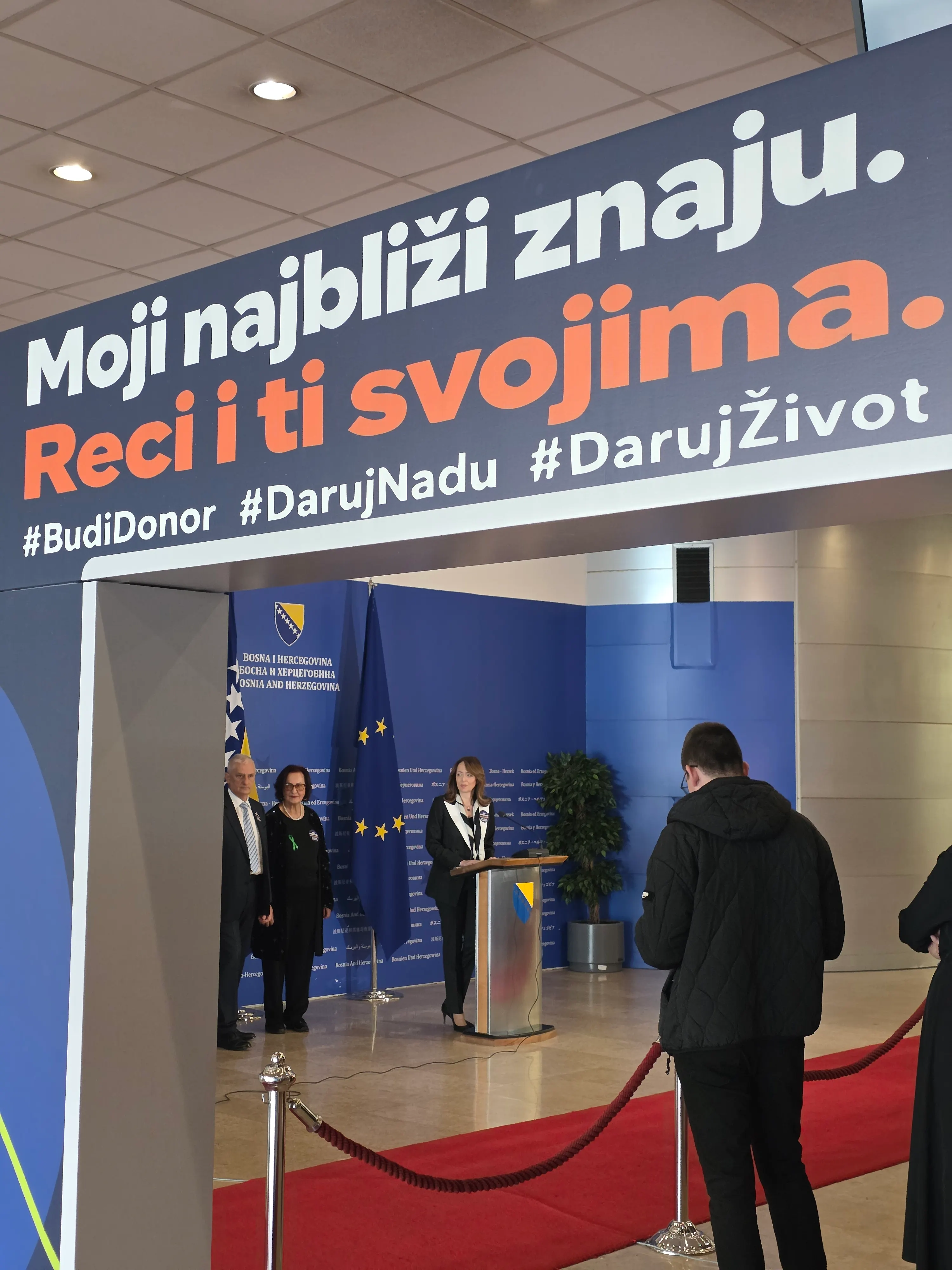
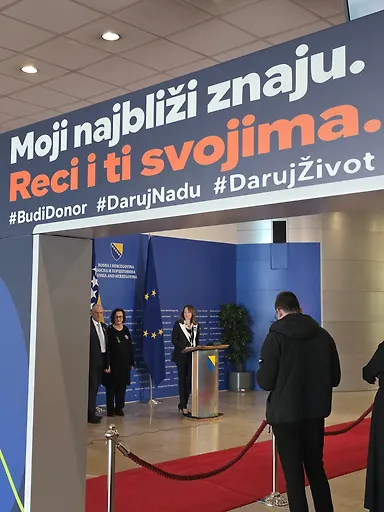
This year’s conference was held as part of the public health campaign launched by the Ministry of Civil Affairs of BiH under the slogan “Be a Donor – Tell Your Loved Ones!”, which aims to raise awareness of the importance of organ donation and encourage people to discuss their personal decisions with those closest to them.
Through the message “My loved ones know. Tell yours, too.”, citizens are encouraged to discuss organ donation within their families so that their wishes are known to the people closest to them.
“If you want to be a donor, tell your loved ones. The decision about organ donation should not be discussed for the first time in a hospital corridor, at the most difficult moment for a family. It should be known beforehand, at home, among those closest to you,” Minister Bošnjak said.
Throughout October, the campaign is being conducted through outdoor advertising, digital screens, radio stations and the communication channels of partner institutions to ensure that the message about organ donation reaches as many citizens as possible.
The campaign has received support from the City of Mostar, the City of Sarajevo, the University of Mostar, the Institute for Public Health of the Federation of Bosnia and Herzegovina, healthcare institutions and other institutional partners. Europlakat, MediaWin, Mepas Mall, RTVHB, BHRT, FTV, ALTA, Sarajevo City Center, and radio sponsors RSG and MIX have also contributed to the campaign’s visibility.
The Third Conference continues the activities that the Ministry of Civil Affairs of BiH has been implementing since 2024 in cooperation with the relevant health authorities, healthcare institutions, international partners and patient associations, with the aim of strengthening transplantation medicine and improving access to treatment in Bosnia and Herzegovina.